


Creatine in Menopause: What Vegan Women Need to Know

Creatine in menopause is a topic that’s been getting very popular lately, and while you might associate creatine with male bodybuilders, there’s a growing body of research on creatine that is relevant to vegan women in midlife.
In this post I’m going to cover what creatine is, how it works, what the research shows for muscles, brain, and mood in perimenopause and menopause, whether it causes weight gain, what the risks are, and why vegan women are in a unique position with this supplement.
As always, this isn’t medical advice. I’m just sharing what the research says so you can make your own informed decision.
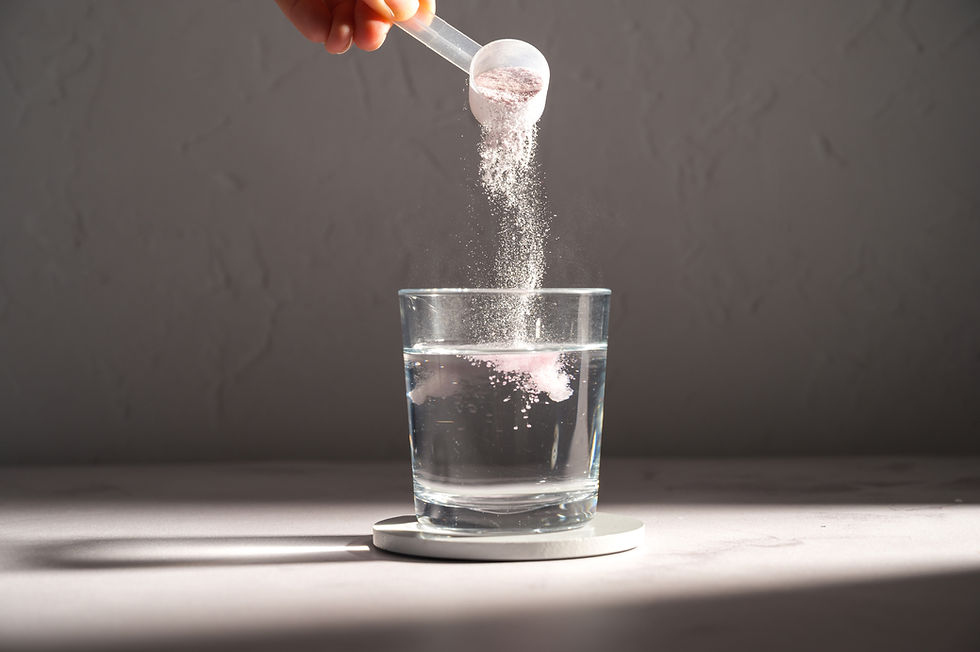
A Brief History of Creatine
Creatine was discovered almost 200 years ago by a French chemist studying the components of meat. He isolated this compound and named it from the Greek word for flesh, so from the very beginning, it was associated with animal tissue. (Creatine supplements are synthetically produced and completely vegan. Just look for a pure source without non-vegan additives.)
In the 1920s, researchers established that creatine was stored in muscle as phosphocreatine and played a role in energy production. Then in the 1990s, researcher Roger Harris showed that taking creatine as a supplement could increase muscle creatine stores by up to 20% in just one week.
That research came right before the 1992 Barcelona Olympics, and got significant attention when several gold medal sprinters mentioned they’d been using it. Creatine went mainstream in sports nutrition and has been popular ever since.
Over the last decade though, research has expanded well beyond sport performance. Creatine is now being studied for brain health, aging, depression, and most recently, for women in perimenopause and menopause. And I'm so glad we are getting this attention.

How Creatine Works in Your Body
Your body runs on a molecule called ATP (adenosine triphosphate): its primary energy source. Every muscle contraction, thought, and heartbeat runs on ATP.
The problem is your muscles can only store enough ATP for about one to two seconds of intense activity. After that, they need to regenerate it rapidly. Creatine, stored in muscles as phosphocreatine, is the fastest way to do that. It donates a phosphate group to rebuild ATP almost instantly, faster than any other energy system in your body.
More phosphocreatine means more ATP regenerated, faster. That translates to more strength, better endurance, and faster recovery. And since your brain uses the same energy system, it also has implications for cognitive function and mental energy.
The Benefits of Creatine in Perimenopause and Menopause
Muscle Mass and Strength
Estrogen is protective of muscle mass. As it declines in perimenopause, women become more vulnerable to sarcopenia (age-related muscle loss). This affects metabolism, bone density, balance, and long-term independence.
Research on creatine supplementation combined with resistance training in post-menopausal women shows meaningful increases in muscle strength and mass compared to training alone. A 2025 study specifically in peri- and post-menopausal women found significant improvements in lower body strength. Perimenopausal women in that study also showed improvements in sleep quality.
The important phrase in this research is “combined with resistance training.” Creatine supports the muscle-building process. It works together with strength training.
Bone Density
One very interesting finding in this area involves bone. A 12-month study following post-menopausal women doing resistance training found those supplementing with creatine lost just over 1% of bone mass at the femoral neck (a common fracture site) compared to nearly 4% in the placebo group. That’s a big difference for a population already at high risk for bone loss.
Not all studies on creatine and bone density have shown the same results, and some longer trials haven’t found much benefit. The research is still developing in this area.
Brain Density and Mood

This is the area where I’m most looking forward to seeing more research.
A 2024 analysis of 16 clinical trials found that creatine may improve cognitive function, including memory, attention, and processing speed. Research also suggests it may buffer cognitive performance during sleep deprivation, which is relevant given that sleep disturbance is one of the most common complaints in menopause.
A 2025 randomised controlled trial in peri- and post-menopausal women found significant improvements in reaction time, and an early signal toward reduced mood swing severity, though that finding didn’t reach statistical significance (p = 0.06). The trial was small and used creatine HCL rather than monohydrate, so more research is needed. It's interesting though that brain creatine concentrations measurably increased in participants.
Why Vegan Women in Menopause Might Be Interested in Creatine
Creatine is found almost exclusively in animal products (mainly red meat and fish). A typical omnivore diet provides around 1 gram of creatine per day. As a vegan, you’re getting essentially zero from food. Your body and brain make their own creatine, but for your muscles, research consistently shows that vegans and vegetarians have lower creatine stores than meat eaters.
You might be wondering: if my muscle creatine is lower, what about my brain? Unlike your muscles, which rely on dietary creatine, your brain manufactures its own creatine independently. A 2014 study used MRI spectroscopy to directly compare brain creatine levels in vegetarians and omnivores and found no significant difference at all. Your brain creatine is not affected by whether you eat meat or not, which is good to know.
Lower muscle creatine stores in vegans and vegetarians have not been shown to cause health problems. This isn’t a deficiency the way B12 is a deficiency. But it can have an impact on strength, power, and muscle mass, and possibly on mood and cognitive function too.
Because you’re starting from a lower baseline in your muscles, you have more room to respond when you supplement with creatine. Research consistently shows that vegans and vegetarians experience a proportionally greater benefit from creatine supplementation than omnivores.
Creatine is one of the few supplements where the research shows benefits across multiple areas in midlife, and vegan women are especially well-positioned to benefit.

Does Creatine Cause Weight Gain in Menopause?
This is probably the question I hear most often with my menopause coaching clients.
Creatine does not increase fat mass. What it does is pull water into your muscle cells. In the first few weeks, you might see the scale go up by a couple of pounds. That is water weight inside your muscles, not fat. If you stop taking creatine, that water weight goes away. It is not permanent.
Creatine can support an increase in muscle mass over time, but only if you’re doing resistance training at the same time. Creatine doesn’t build muscle on its own; it helps your muscles work harder and recover better, which leads to muscle growth when combined with training.
Muscle is more metabolically active than fat. More muscle means a slightly higher resting metabolic rate, so your body burns a few more calories at rest. Over time, that supports weight loss. Creatine isn’t a weight loss supplement per se, but combined with resistance training, it can support the kind of body composition changes that make weight loss easier to sustain.
The water retention tends to be most noticeable with a loading phase. Skipping the loading phase and starting at a maintenance dose (more on that below) reduces this for most women.
What Are the Risks of Creatine in Menopause?
Kidney Health
The most common concern about creatine is kidney damage.
Creatine breaks down in the body into creatinine, a waste product that your kidneys filter out. Creatinine is also what doctors measure to assess kidney function. So when you’re supplementing, your creatinine levels go up, and a doctor who doesn’t know you’re supplementing might interpret that as a sign that something is wrong.
Research in healthy people consistently shows no adverse effects on actual kidney function. A 2025 review in Frontiers in Nutrition concluded that creatine monohydrate is generally safe for healthy individuals at standard doses. If you have pre-existing kidney disease or take diuretics, check with your doctor first. And if you’re getting bloodwork done while supplementing, let your doctor know so they can interpret the creatinine correctly.
Stomach discomfort
Some women experience gas or stomach discomfort with creatine monohydrate, which doesn’t always dissolve well. Micronized creatine monohydrate is gentler, and taking it with food and mixing thoroughly in warm water can help.

How to Take Creatine in Menopause
Which form
Micronized creatine monohydrate. It’s the most researched, most affordable form, and there’s no good evidence that more expensive forms outperform it. Micronized dissolves more easily and tends to be gentler on the stomach.
How much
3 to 5 grams per day. Starting at 3 grams is sensible, especially if you’re not doing intensive training, and you can increase from there.
Loading phase
A loading phase (15 to 20 grams per day for 5 to 7 days) saturates your muscles faster, but it’s where most of the water retention and stomach discomfort comes from. I've personally tried doing a loading phase but found the bloating too uncomfortable. Starting at 3 to 5 grams daily with no loading phase gets you to the same place in 3 to 4 weeks with far fewer side effects.
Timing
Consistency is more important than timing. Mix well in warm water, take with food, and stay well hydrated throughout the day. Some research slightly favours post-workout, but the most important thing is that you take it every day.
Frequently Asked Questions About Creatine in Menopause
Q. How long does it take to see results from creatine in menopause?
A. You’ll notice the initial water weight change in the first couple of weeks. For strength and muscle benefits, most research uses supplementation periods of at least 8 to 12 weeks, and effects are more consistent in programmes lasting 24 weeks or longer. For cognitive benefits, the timeline is less clear but giving it at least 8 weeks alongside lifestyle changes is a good starting point before assessing whether it’s working for you.
Q. Do I need to exercise for creatine to work?
A. For muscle and bone benefits, yes. Resistance training is what makes the real difference, and creatine helps those results. Without training, you won’t see much change in muscle mass. For cognitive and energy-buffering effects, there may be some benefit even without exercise but there is not as much research on this. Either way, even light resistance training like bodyweight, resistance bands, or weights would be good to add if you can.
Q. Will creatine make me gain weight ?
A. Creatine does not increase fat mass. The scale may go up by a couple of pounds in the first two weeks, but this is water in your muscle cells. It's not fat, and it's not permanent. Over time, creatine combined with strenght training can support weight loss indirectly by helping build muscle, which helps raise your resting metabolic rate. Creatine is not a weight loss supplement though.
Q. Is creatine safe for vegan women in menopause?
A. Yes. Creatine supplements are synthetically produced and contain no animal products, so they’re completely vegan. Research in healthy people consistently shows a strong safety profile at standard doses. Just choose a pure micronized creatine monohydrate without non-vegan additives, and check with your doctor if you have any kidney concerns or are on diuretics.
Q. What happens if I stop taking creatine?
A. Your muscle creatine stores will gradually return to baseline over a few weeks. The water weight that came with supplementation will go away. Any muscle mass you’ve built through training while supplementing stays. There are no withdrawal effects or rebound issues from stopping.
Q. Can creatine help with menopause brain fog?
A. Possibly. Research suggests creatine may support cognitive function including memory, attention, and processing speed, and may buffer cognitive performance during sleep deprivation. Research in menopausal women is still early. What we do know is that your brain makes its own creatine regardless of diet, so supplementing adds to that existing supply.
Conclusion
Creatine is one of the most well-researched supplements and has a strong safety record in healthy people. The new research for women in perimenopause and menopause on for muscles, bone density, cognition, mood, and sleep is very exciting.
As a vegan woman, your muscle creatine stores are lower than an omnivore’s, which means you have more room to respond when you supplement. Your brain is well taken care of regardless: it makes its own.
Whether it’s right for you depends on your situation and how your body responds.
If this post has you thinking about what else might be getting in the way of your weight loss, beyond supplements, I have a free quiz: What's Getting in the Way of Your Weight Loss in Menopause? It takes about two minutes and you can check it out here.

About the Author
Anna Pelzer is a Registered Health and Nutrition Practitioner, certified Food Addiction Coach, and meditation and yoga nidra instructor. She lost 20 pounds in perimenopause on a vegan diet, after being told it couldn't be done, and now helps vegan women in their 40s and 50s do the same inside her 12-week program, The Menopause Weight Loss Breakthrough. She is the host of The Vegan Menopause Podcast.
Like this post and want to read more? Check out these resources:
DISCLAIMER: This website's information is general in nature and for informational purposes only. It does not constitute medical advice and is not intended to substitute for professional medical advice, diagnosis, or treatment.
References
1. Kerksick C et al. The emerging and evolving evidence supporting creatine as an ergogenic aid: history and applications. J Int Soc Sports Nutr. 2026;23(1):2646627. https://www.tandfonline.com/doi/full/10.1080/15502783.2026.2646627
2. Hall M et al. Creatine monohydrate supplementation in perimenopausal and postmenopausal women: effects on muscle strength and sleep quality. PMC. 2025. https://www.ncbi.nlm.nih.gov/pmc/articles/PMC12291186/
3. Chilibeck PD et al. Effect of creatine supplementation during resistance training on bone mineral density in postmenopausal women. J Nutr Health Aging. 2015;19(1):94-99. https://pubmed.ncbi.nlm.nih.gov/25386713/
4. Xu C et al. Effects of creatine supplementation on cognitive function: a systematic review and meta-analysis of 16 RCTs. PMC. 2024. https://www.ncbi.nlm.nih.gov/pmc/articles/PMC11275561/
5. Korovljev D et al. CONCRET-MENOPA trial. J Am Nutr Assoc. 2026;45(3):199-210. https://www.tandfonline.com/doi/10.1080/27697061.2025.2551184
6. Longobardi I et al. Safety of creatine supplementation: a systematic review. Front Nutr. 2025. https://www.frontiersin.org/journals/nutrition/articles/10.3389/fnut.2025.1682746/full
7. Smith-Ryan AE et al. Creatine in women’s health: bridging the gap from menstruation through pregnancy to menopause. J Int Soc Sports Nutr. 2025. https://pmc.ncbi.nlm.nih.gov/articles/PMC12086928/
8. Chidi-Ogbolu N, Baar K. Effect of estrogen on musculoskeletal performance and injury risk. Front Physiol. 2019;9:1834. https://www.frontiersin.org/journals/physiology/articles/10.3389/fphys.2018.01834/full
9. Yazigi Solis M et al. Brain creatine depletion in vegetarians? A cross-sectional ¹H-MRS study. Br J Nutr. 2014;111(7):1272-4. https://pubmed.ncbi.nlm.nih.gov/24290771/

I appreciate sites that feel like a labor of love rather than a business venture, and this one fits that description well. The self-hosting guides are clear, and the free resources are actually useful. If you're tired of generic listicles, this hand-maintained site might be exactly what you need.